
On the Making of Steel Genesis: Sandra Gould Ford
May 2, 2024
(Full transcript below)
“My name is Sandra Gould Ford. We’re here at my home in Pittsburgh, Pennsylvania. I am an artist, I write, I create photography, and I also do what are called illustrated wisdoms, which is a sort of a journaling for personal insights. I’m also a textile artist who makes quilts.”

[Transcript]
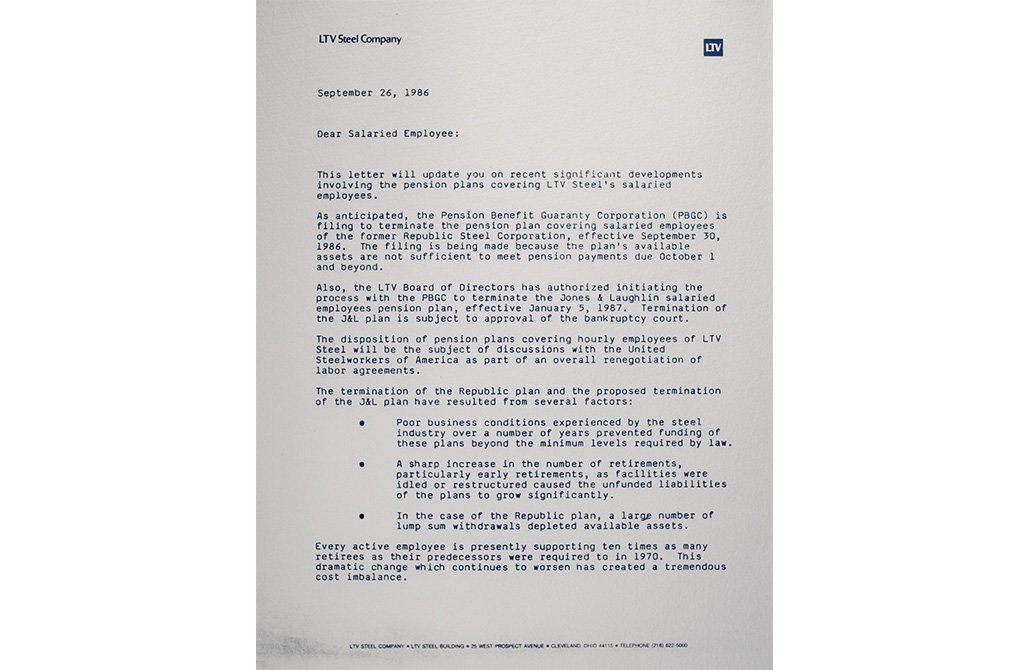
I worked in the Jones and Laughlin Steel Corporation from April 1977 to April 1985. The Jones and Laughlin Steel Corporation was acquired by LTV, Ling-Temco-Vought, which would have been a company that sort of ushered in the whole concept of the conglomerate in the late ’60s, early ’70s. LTV decided to acquire the Jones and Laughlin Steel Company, as we now understand, because they needed money and because the steel workers had such a huge pension that they wanted to dip into, that they wanted to access. And so, there was a lot of stuff. Mr. Ling, who was a Texan, who sort of began this concept was called down to Congress to testify about his plans and so on and so forth and eventually was able to acquire the Jones and Laughlin Steel Company. Everybody in Pittsburgh continued to call it J&L, Jones and Laughlin. And they basically ransacked the steel workers’ pension fund over the years. So, in the end, when the company shut down, the US government had to step in and pay all those steel workers’ pensions and is still paying them today. The US government started what’s called the Pension Benefit Guaranty Corporation for situations like this, where people are entitled to pensions but the companies cannot pay them. So, the government steps in, taxpayer dollars, to pay these pensions. And they’re not paying them at what the people would have gotten if—if the money had been handled properly, but they’re still getting something. So that’s what happened there.
The gentleman who hired me, his name was Frank Rote, was a big, robust guy with a huge, robust personality. And he really knew how to work with people. He was what was called the assistant works manager, which means he was second highest ranked person at that facility. He was brought there to build the electric furnaces, so I worked for him in the afternoons, and I worked in the chemistry lab in the morning. In the chem lab, what those people did was they received the steel from the furnaces, and they had different processes for analyzing samples of steel to make sure that it met the customer specifications. The steel had to have certain ingredients. You basically have iron because that’s all steel is, is iron. But they add these different tiny little bits of ingredients to this enormous kettle of steel, and it makes these subtle changes in how the steel functions so that you have a steel that you can machine and make screws with. You have steel that you can use for your silverware. You have steel for your pots, and you have steel that’s very tough. You have steel that has great flexibility. And so, the customers would send in what chemistry they wanted their steel to have.
The Jones and Laughlin Steel Company began with a man like—named Benjamin Franklin Jones, and he partnered with a gentleman named Laughlin. And they built—they decided to go into the—probably the ironmaking business because, at that point, the Bessemer furnace, which made making steel fast and affordable, was just being invented over in England in the 18—late 1850s, 1860s. When they got to the United States as a method, the first one in this area was out in Braddock, at the Edgar Thomson Works, which would have been Andrew Carnegie’s very first steel mill. And Edgar Thomson was the gentleman who ran the railroads. Andrew Carnegie, being the crafty gentleman he was, decided if he named the steel mill after that man, that man was likely to order steel from there for the rails.
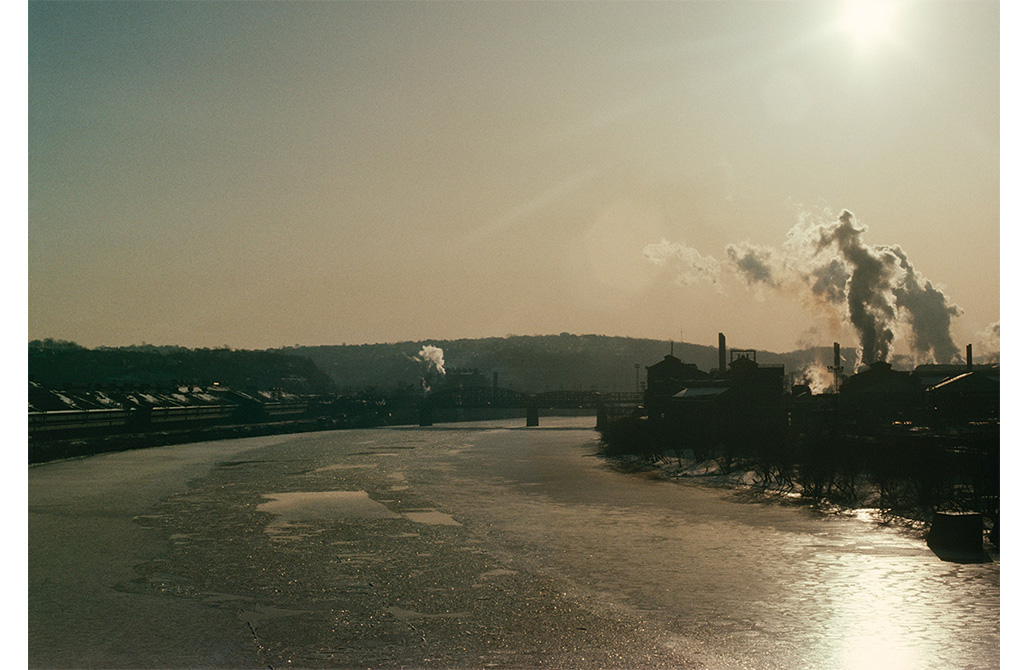
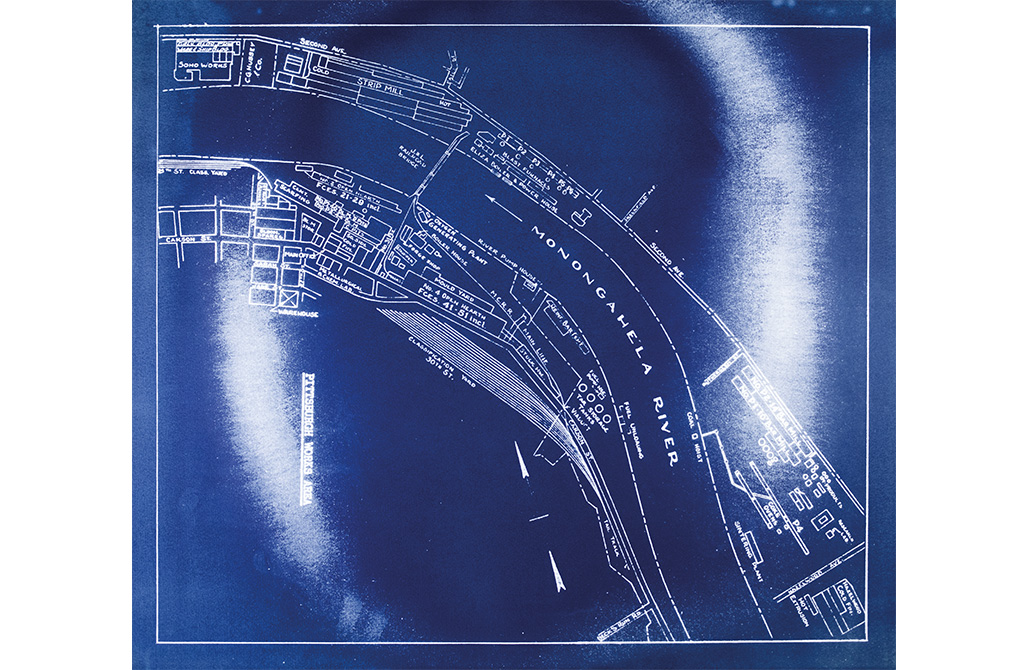
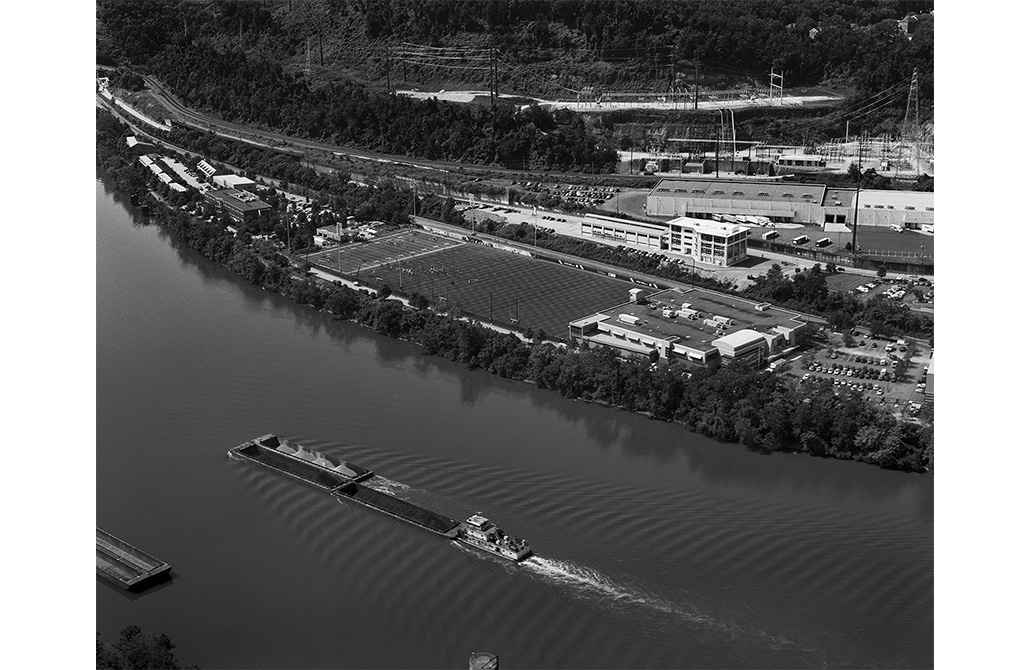
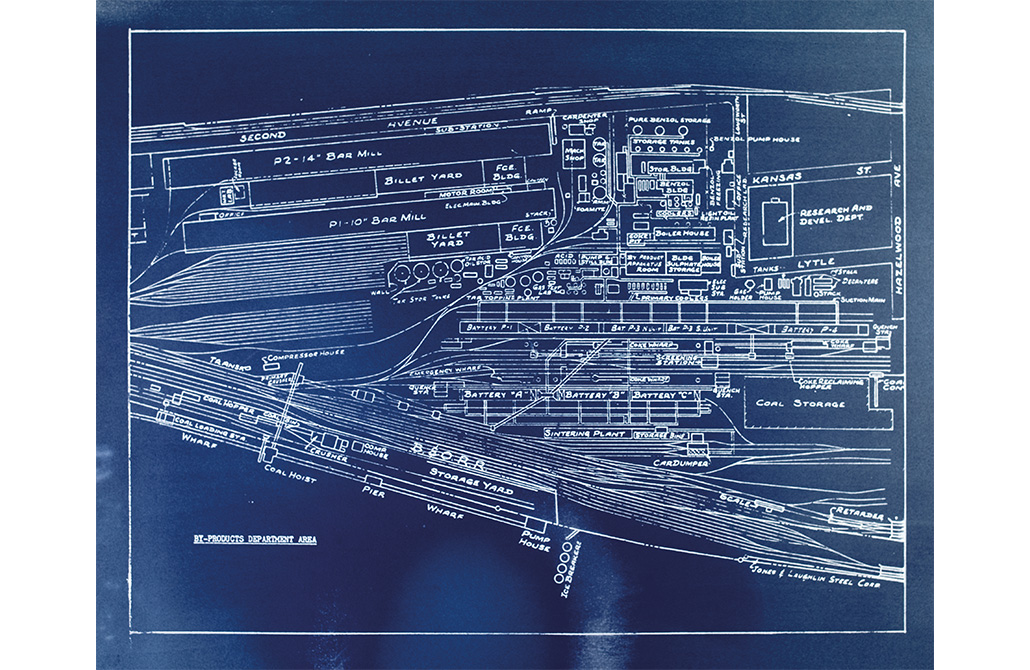
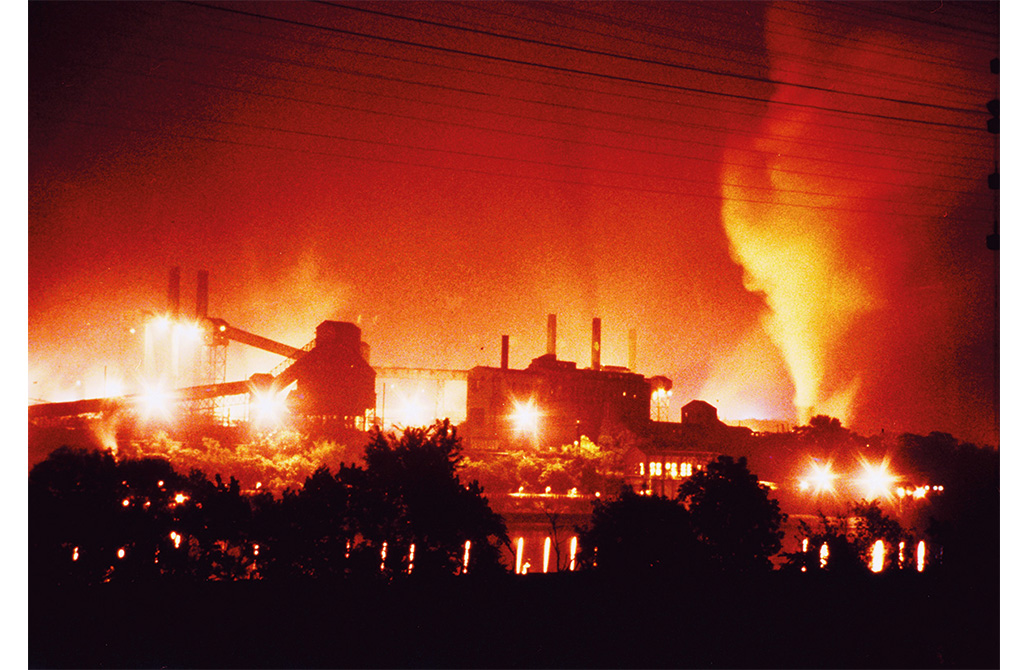
Coke ovens at midnight. I’m on what would be called the end of East Carson Street, heading towards River Road. And across the Monongahela, you could see the byproducts department. And the byproducts department existed to handle the gases and fumes and the whatever that came from turning coal into coke. And coke would be the name for pure—as pure as you could get coal to become just carbon, because carbon is what they would use to make the steel. So, they would melt it down in the blast furnace and send it over to be refined and—send that iron over to be refined into steel. So, the coke ovens had to do with creating the coke. They had to do with turning the coal into carbon. And then it would go into the blast furnaces to become iron. And then from—then shipped across the hot metal bridge. When I was in the blast furnace and saw them tap a blast furnace, those guys are standing on mounds of sand and dirt as the molten iron is coming out of the furnace in streams. And you’d swear you were in Hawaii at Mount Kilauea with the lava coming out. I mean, they’re standing right there with it. If they slipped on the—on the dirt or something, they’d slide right into the channel of molten iron. You know, but those folks, that was their day at work. That was their nine to five, is working under those conditions. So, the coke ovens were these, what they call batteries, that might be 50 or some ovens to a battery. And they would put the coal in, and they would incinerate it to drive off everything that wasn’t carbon that they could drive off. And they would have these—this place that was called the quenching station. So, this great gush of steam would come up when they were quenching this superheated coal that had become coke. And I always wanted to take a photograph of that. And so, the key was as I would drive back and forth and see it at night was how do you get this flue coming up, you know. So that required a time exposure. I’m determined to get this photograph. I park on the side of the road. I hauled my camera across the road, set it up on its tripod. So, I was shooting 35 millimeter on my Nikon camera, eight—eight-second exposure. The lens would have been maybe F8. I’m waiting for each one of these quenches to happen so that I can expose the film. From the time it first comes up is this little cloud coming up, this little tiny cloud coming up. And then hold the shutter open until the steam fully, fully rises as you see in this photograph.
I was no longer working. I had been—you know, my jobs had been discontinued at that point. But they knew that I had this real passion to tell what the story of the—of that mill was. And they respected that. And so, they let me come back and access different things. They knew that my interests were caring about the mill. I wasn’t trying to document anything that would get anybody in trouble, you know. I wasn’t trying to, you know, do any sort of OSHA work or something like that, you know. I really wanted to capture the mill. Plus, my—what really got me sort of started was my first serious photograph was of the mill, and it was juried into Three Rivers Arts Festival in 1979. And that was a tough jurying session. I later met the woman who was working with Three Rivers Arts Festival who was there when that judge was selecting the work that would go in. And she said that was a tough judge. If your photograph got in past her, that’s a good thing. So, they knew that I had done work, that it had been—it had been accepted by people in the art world. As long as I didn’t make a big deal about it, about the fact that I was bringing my cameras in and photographing, then, you know, as long as they didn’t get in trouble. You know, because the whole reason you weren’t allowed to photograph anything in the mill had to do with World War II, as I understand it, and concerns that the Germans or whoever, you know, was trying to get information on how operations—and, at that time, the Pittsburgh mills were pretty much making the steel that made the Allied more possible.
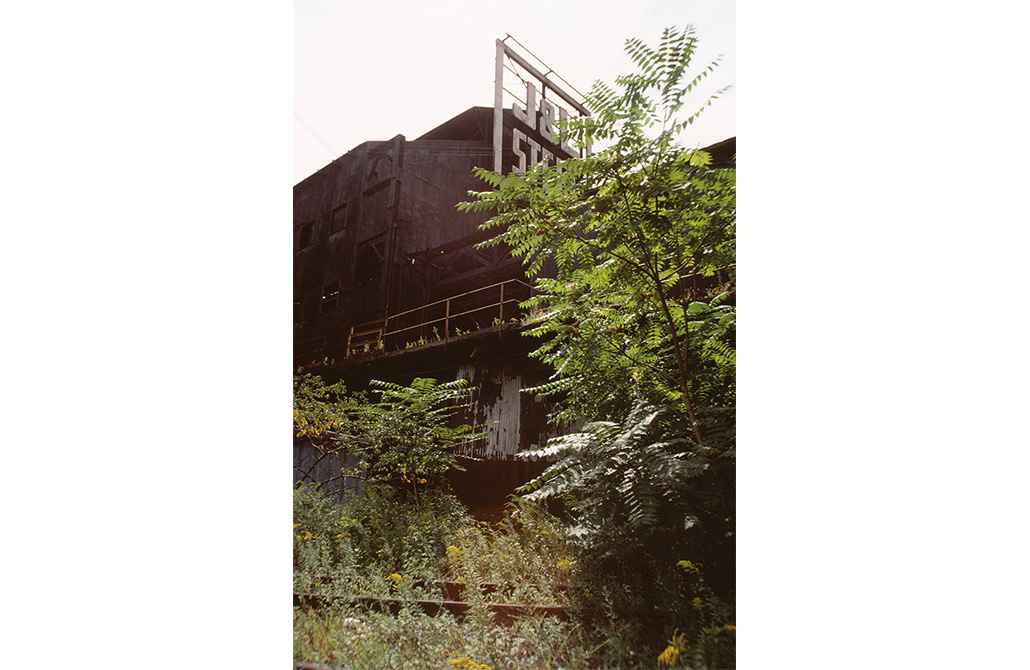
The Bessemer furnaces were in Two Shop, and Two Shop had these huge holes in the ceiling, a platform, concrete platform, which would have been where the Bessemer furnaces sat. And then the—and then the holes in the ceiling that the flames could shoot out of. And as people would tell me, they could read their newspapers a block away from the light from those flames. So, but that—those flames gave Pittsburgh the name “hell with the lid off.” You know, people think it was blast furnaces, but it was the Bessemers. So, I had this fascination with the Bessemer furnaces that were—they started them up again for the Korean War because they needed everything that could make steel to make steel. So, the Bessemers had been shut down, but they started them up again to make steel for the Korean War. And that was the end of it for them. And they were gone by the time I was there. Nonetheless, I have this fascination with abandoned places. Plus, I also felt like there was energy in the beams and energy in the walls and energy in the stones and energy in the architecture. And so, they were holding memories. They were holding memories that, if you were quiet and went through, you could feel it. You might not hear it. But you could feel that there was something there. And so, I was definitely attracted to those places. And one day because I also had—there was this whole magical thing about the melters. And I was prowling around, and I saw these steps going up the side of the building. And this is a corrugated steel building, so it’s not substantial in any way. You know, It’s just corrugated steel wall. But there were steps going up. And I could see a door at the top. So, I says, “Well, Sandra. Let’s go see what’s up there.” And I’m going up these old, old steel steps, Lord knows. They shut down the Bessemers in the ’50s. This is 30 years later. So how old the steps were, who knows. But I go up. And I step to the doorway and I look in. And I’m just looking in this room. And I’m realizing this is the melter’s pulpit because remember the melters did their work were called pulpits. This is the melter’s pulpit for the Bessemer furnaces. It was like somebody walked away from there in 1952. Nobody ever went there again. And I—it would have been the same feeling as when those folks opened King Tutankhamun’s tomb. You just felt like you had entered a place that had been not entered for a very long time. And I just couldn’t even step in. I did not want to disturb the dust. And I just took photographs from outside and was just forever grateful that I found that place because it’s all gone now.
Words are hard to explain it because you have the sense that, for generations and generations, people had been working to make steel for whatever wars, for whatever battleships, for whatever cars, for whatever products, because Pittsburgh was the steel capital of the world at one point. We were making the steel here. So, these men were up here, you know, dealing with the chemistry, trying to get it right. And I had to figure that those great big round wheels that were there was—I’m guessing was how they tilted the Bessemers. I just felt like I had entered a place that was sacred, that this was where generations of people had spent their time and their lives. And even though steel workers could be pretty irreverent, pretty irreverent, nonetheless, this was a life that was lived. And I just didn’t want to—all I wanted to do was capture it visually, but I didn’t want to interfere with it because there was dust on the floor. That—how did that dust get there, that thick, that would accumulate and pile up and pile up. And it’s like a silt covering on the floor. It was just special.
Ghost of Two Shop
When you’re walking up through Two Shop
You’ll know someone is around
When you hear a sort of clanking
And a hollow moaning sound
For the ghost of Jim Grabowski
Who was killed in ’22
Must forever walk through Two Shop
Which I will explain to you.
Old Jim fell into a ladle,
And they couldn’t find a trace,
So they couldn’t take the body
To a final resting place.
So Jim glides among the girders
And among the rusted beams,
And they say that after midnight
You can hear Grabowski’s screams.
He recalls the awful tortures
And the searing ladle heat
And the welding hose that tripped him
And was tangled round his feet.
Yes there is a ghost in Two Shop;
I have seen this specter twice,
And you’ll stay away from there at night
If you want my advice.
And the specter hates all welders
With a cold, inhuman hate
For a welder was responsible
For his untimely fate.
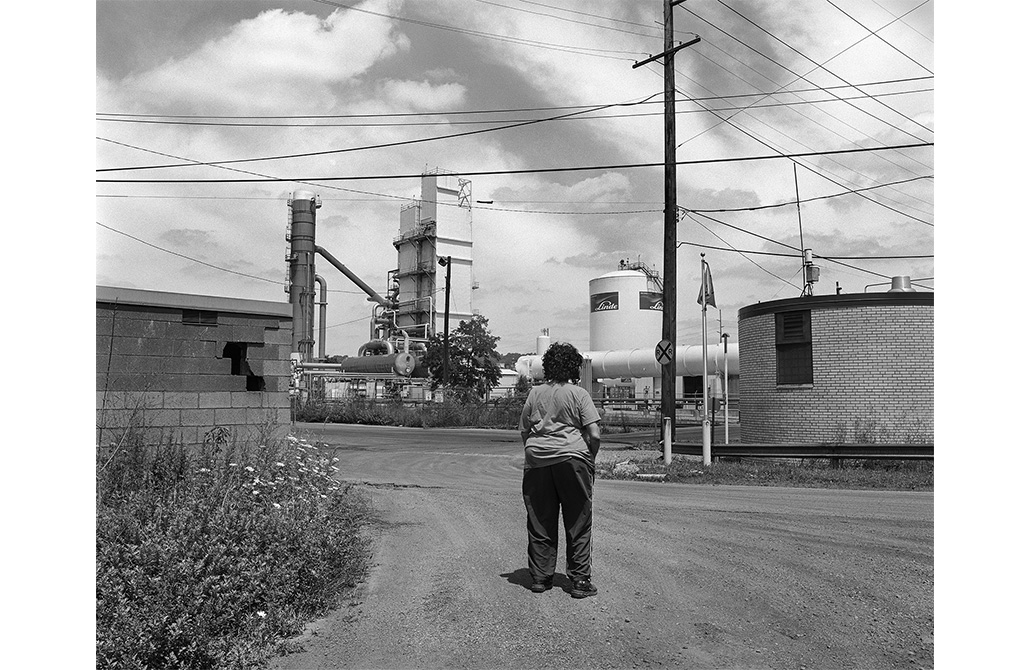
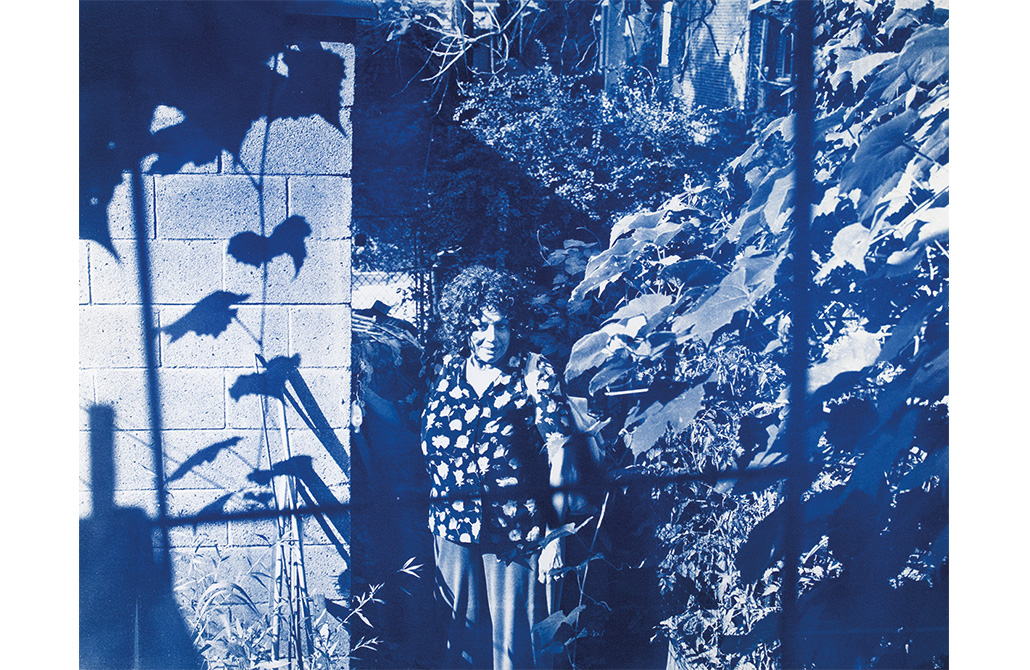
At the end, when people knew that I was trying to document things about the mill, I got to go over to the north side, which—I didn’t work over there, I had really very little connection over there. But that was a major part of the steel mill. You know, it was the north side of the river and the south side of the river, and I was on the south side. But I got to go over to the north side to talk to people who work with the coke oven batteries and the byproducts department because that was the last operation there. Somehow it came up that there were peach trees growing in the coke oven property. And given the fact that those people could not—because of the fumes and gases and everything that came out of the coke ovens and the byproducts department that handled the exhaust from the coke ovens, those people couldn’t wear their clothes home. You know, they were not allowed to take anything from the mill. It had to be laundered in the mill. They were really proud of their peach trees. So, at some point later, after everything was all said and done but there was still a little bit left of the mill, you know, because I kept going back for years to photograph different things. And so, I said, I wonder if I can find these peach trees. And I’m poking around and probing around, and I found them. They were over there on the north side, over on the Hazelwood side. And the guy seemed very pleased with them. They were pleased with how big the peaches were. Nobody talked about actually eating them. But that, you know, just spurred my interest in that.
My experience of many places like Four Shop, which was where the open-hearth furnaces were where they made the steel. I would call it primordial. It was like walking back into when the Earth was creating— creating itself, and there was lava and fire and brimstone all over the place. The charging machine that would put the oars in the furnace rode on tracks. And it would take a bucket like a bath-sized—bathtub- sized tub, pick it up, and carry it into the furnace and dump it. But to look at it, it made me think of a dragon picking up this bucket, shoving it in the furnace, turning it upside down, righting it, and pulling it back out. So it was that type of a world with these big mounds of rocks all over the place. And you have people working in that environment who nonetheless lived very human lives.
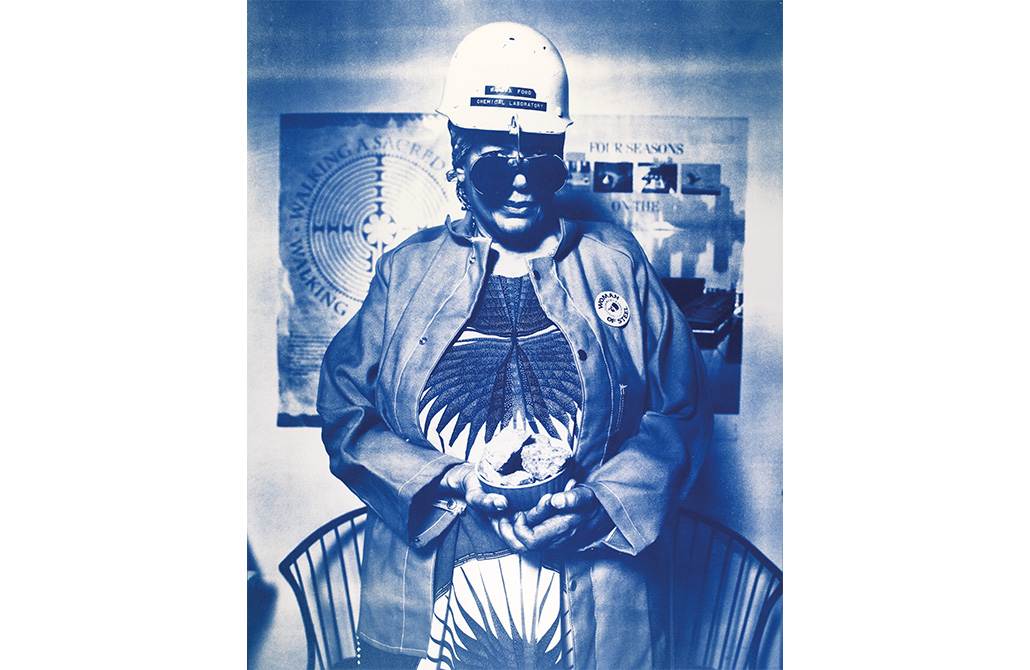
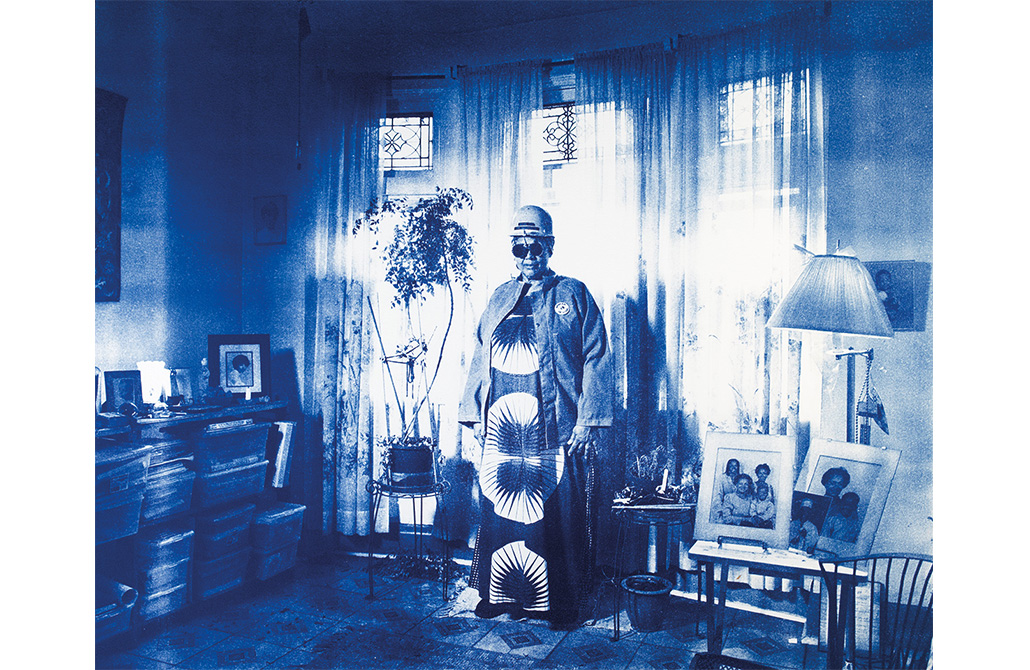
I’m wearing my hard hat, my white hard hat, which would be what the salaried employees wore, was the white hard hats. And then the hourly employees wore orange hard hats. These goggles that I have on in the photograph were to allow you to look into the furnace because the steel was—if you think about how you’re not supposed to look at the Sun during an eclipse, looking at steel inside the furnace would be the same thing. You could not look at the steel. You had to have special glasses. And these were sort of a cobalt, something very thick, dark blue glass that you wore when you were going to look in the furnace. I’m wearing my summer-weight green asbestos jacket. And to give my African heritage, it’s to—then I’m wearing one of my African—African print dresses from Africa.
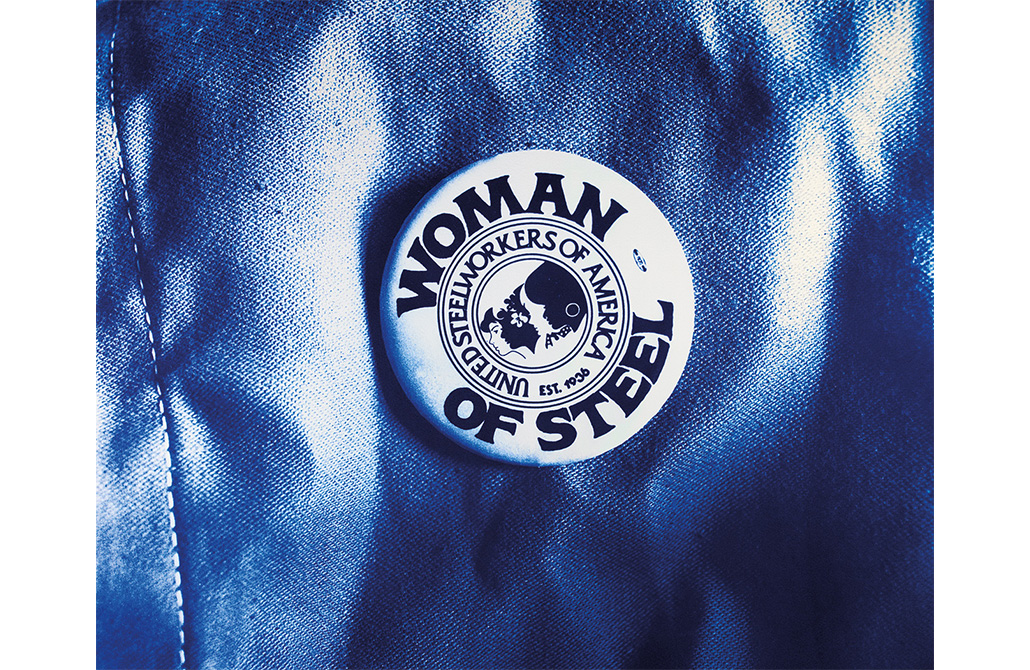
“Woman of Steel, United Steelworkers of America.” And this was a button I would have gotten perhaps from Steffi Domike, who was—who worked at US Steel. She was very active at organizing in the union, Steel Workers Union. Well, here in the photograph to the left would be me with my grandson, Aaron, when he was a little guy; and my daughters, Cassandra and Candice. And this room is a special space where all my creative writing is done. The stories tend to be aligned with everything else I’m doing in terms of looking at people facing challenges or obstacles of some sort, you know, sort of influenced by the hero’s journey to some extent, that in life, you know, we can face things. And what choices do we make and whatever choice we make, whether it seems to work out or not, we can keep going. The hero’s journey is a concept that I came across through Joseph Campbell in The Power of Myth, his documentary, The Power of Myth series that he did with Bill Moyers and also the book that he wrote. But all of that was based on a book that he wrote, I believe in the 1930s, called The Hero with a Thousand Faces. And in that book Joseph Campbell, who studied various mythologies and various stories that people tell themselves to explain cultures, tell themselves to explain life events. What he realized in his life is that we’re all the heroes of our own great adventure and that we, as we go forth in life, that we may have dragons that we have to slay, that we may meet shape shifters of various sorts, that all the monsters and all the angels and all the magical things that exist that we could encounter in life are being told to us through these mythologies, but we could experience them in real life.
The Making of Steel Genesis began with my commitment to creating a history of the Jones and Laughlin Steel Mill where I worked for eight years. And I found it was such an extraordinary world that I wanted people to know about it and to know about that mill. Genesis has to do with something coming into being, that we can always be coming into being and that genesis is not just this universal, mystical concept; but it can also be a personal concept, something that can happen in our lives. Every moment can be a moment where we become something more than we were before. Everything that goes into making steel occurs in nature. The iron, the ores, the molybdenites, the nickel, the copper, the aluminum, everything that goes in exists in nature. But people have to make steel. You can’t go out somewhere and dig steel up out of the ground. You have to make it. And so, I began to see that Steel Genesis could be about becoming but also to suggest that we can create lives of steel, something that can’t occur in the natural world that is special and unique and strong and can be stainless steel.
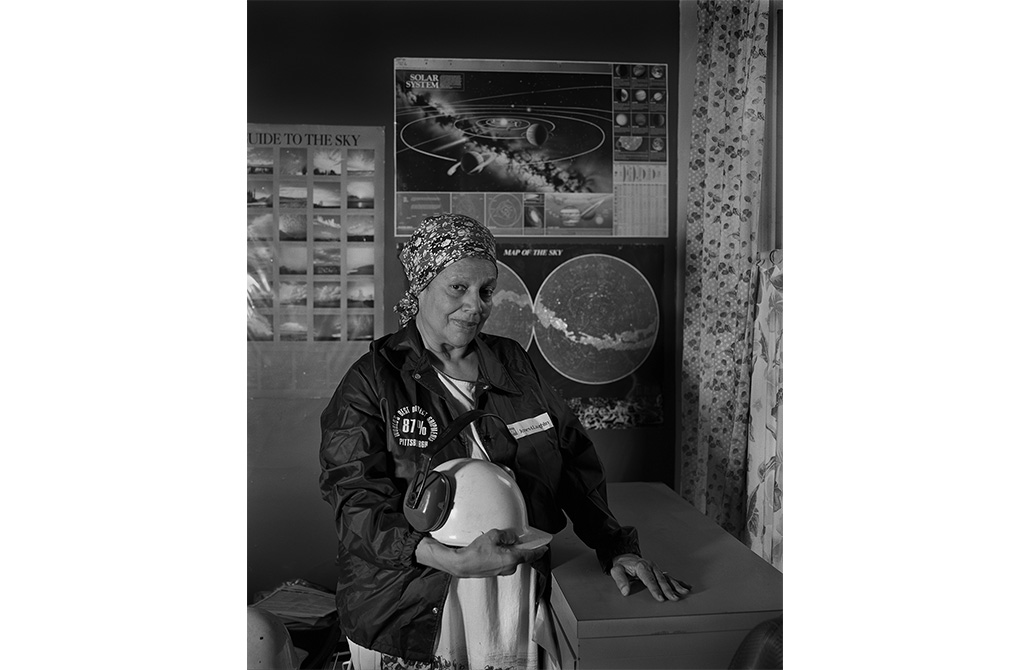
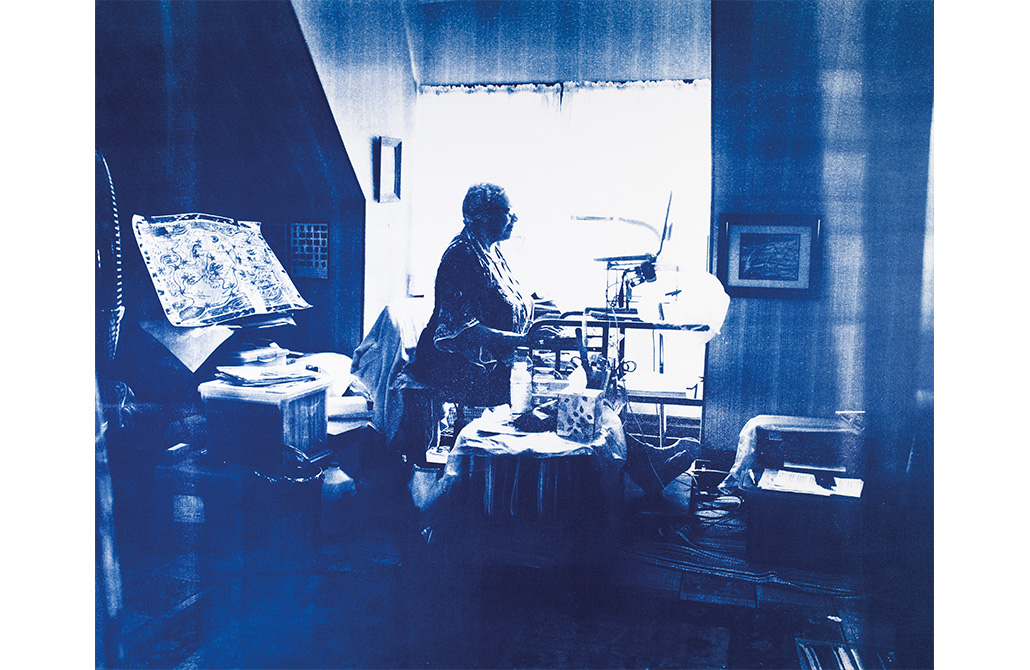
So, this portrait would be of me in my second-floor office. And the first poster is a guide to the sky. And it’s basically showing all the different types of clouds that we could see in the sky, which fascinates me, you know, that we have these sort of visual displays overhead, if we just look up and see them. You know, we have these fantastic formations. And we can look at them and we can let our imagine soar and fly and see what we can see in the clouds as they come together and as they pull apart and as they dissipate and become something else. And then the other poster, the top part of it is—the top poster is called The Solar System. And, basically, it’s showing all of the planets in their orbits around the Sun. And I just love astronomy. And then that misty area beneath circling planets would be the Milky Way, which would be all the other stars that we can see in our galaxy, which is really a very small portion. But this poster contains the speeds of the planets as they’re traveling around the Sun, including how fast the Earth is traveling as it circles the Sun, which is pretty fast. Might be about 18 miles a second. It’s pretty fast. And in order for it to make—because the Earth is about 93 million miles from the Sun. So, for to make that circle of however many hundreds of millions of miles every year, it has to be traveling pretty fast. And, on top of that, it’s also spinning because the Earth is 24,000 miles around at the equator. And so, for it to make that spin in 24 hours means that it’s—the Earth is spinning at 1,000 miles an hour at the equator. We’re really moving pretty quickly. Then you have the Sun, which is circling the Milky Way. We’re dealing with vast, huge things, which is why astronomy so fascinates me because it’s so huge. You know, it’s believed that there are maybe a few billion stars just in our galaxy. And then there are billions of galaxies with billions of stars in them. So, we’re—so we’re really very minute in all of this, and yet we’re magnificent. And that we exist in all of this, you know, that’s very thrilling to me. And then below that picture of the solar system is the map of the sky. And that sort of dominant wavy line that’s going across the two circles would be the Milky Way, with the different constellations in the northern hemisphere and in the southern hemisphere, which would be people looking up at the sky at the night in the nighttime and deciding that they see patterns in the stars. They see a bear. They see a high-flying horse. They see a river. They see a porpoise. They see all of these things that they see in—the Big Dipper, the Little Dipper. They see all these—they take these sort of collections of stars and see a pattern in them. And then, from that pattern, they create stories that are like their own little myths, finding ways to tell stories that help people understand life and deal with life’s events. So that’s why I have this great love of the—of astronomy, of the vastness of it, of the stars and how different they are. You know, it’s just such a huge universe to exist in. It’s marvelous.
We are all stardust. We are all stardust because stars come into being and go out of being. And when they go out of being, as a rule, they explode. They’re these novas. But a star begins, I believe, as just helium and hydrogen. And then, as the—under the great gravitational forces that go on, then you have nuclear fusion occur. And as that nuclear fusion occurs, then you have atoms created. You know, at first all you had was helium and hydrogen. Now you have all the other elements that can only be created in the stars so that when a star’s life ends, it sends these elements out into the—all the elements that you can think of, gold, silver, all of the elements then go out. And then they become us. And so that’s why that gentleman said, we’re all stardust. We’re all made up of stars.
So here I’m wearing my jacket, which is probably one of the last things that was given to employees at the LTV as it became Jones and Laughlin. The jacket says, “World’s best direct shipments, Pittsburgh 87%.” And apparently that was a huge achievement that they wanted to acknowledge. And I’m holding my white hard hat, which would be the hard hat for office workers or salaried workers. And then I’ve got my ear cover, ear protectors over the hardhat. And my hand is resting on the file cabinet where the—where my research and documents are kept. The first issue of the Shooting Star Review was published in the spring of 1987, which would be two years after—after, you know, my work at the steel mill ended. And—but the name of the magazine came from the fact that I had taken my daughters to a drive-in movie. And it must have been in the middle of August because I’m sitting there looking at the—they’d fallen asleep in the back of the car, little girls. And I’m sitting there looking at the movie, and these shooting stars keep flying over the screen. They keep—they just keep flying and flying and flying, and I’m bedazzled by it. And so, when I thought of the name—a name for the magazine, I thought how wonderful that these sparks of light streak through the darkness and excite your imagination. Several times a year we have these great meteor showers. And the one in mid-August or the Perseids seem to come from the constellation Perseus. There may be one shooting star a minute or even more frequently on those nights because some long time ago a comet flew by and left all this debris. And every year, on clockwork, the Earth goes through that debris, that dust. And that dust enters the atmosphere and ignites and become shooting stars. So that’s the name.
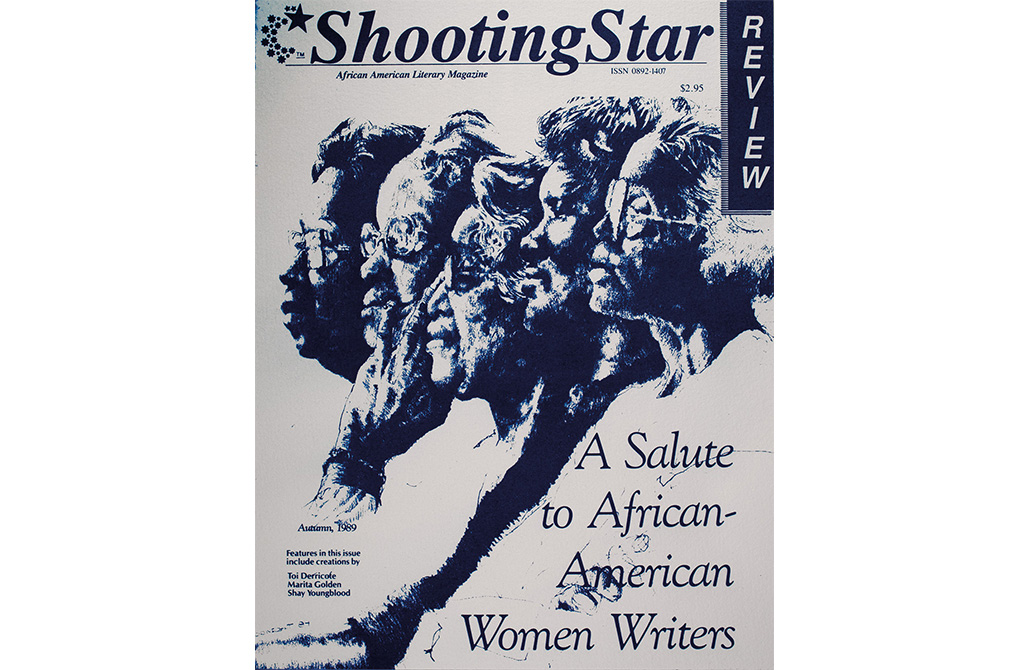
What I wanted was to provide a place to celebrate and present information about the Black experience. We published 32 issues. And it can be viewed digitally through the Hillman Library in Pittsburgh, but it’s also archived in about 22 libraries around the country. The Autumn 1989 issue of the Shooting Star Review was called a salute to African American women writers. And so, the intent for this issue was to really bring forward samples of wonderful writing that could allow us to celebrate what African American women writers were producing. And this issue included work by the marvelous poet Toi Derricotte, Marita Golden, Shay Youngblood, and many others.
Two of Shooting Star’s fiction editors went out and found the work, Carla and Carol, and pulled together a marvelous issue. And the illustration is by a fabulous artist who, again, just gave us such a gorgeous portrait of Black women that—So many of Shooting Star’s issues remain treasures in my heart, but this one is certainly one of them. In the very first issue, the one thing I was definitely sure that I wanted to do was to include the essay by Langston Hughes called “The Negro Artist and the Racial Mountain.” This poem by Langston Hughes certainly speaks to the experience of producing steel. It’s called “Steel Mills” by Langston Hughes.
The mills
That grind and grind,
That grind out new steel
And grind away the lives
Of men,—
In the sunset
Their stacks
Are great black silhouettes
Against the sky.
In the dawn
They belch red fire.
The mills,—
Grinding out new steel.
Courtesy of: The Museum of Modern Art
