
Lewis W. Hine’s photos helped child labor laws pass a century ago
Los Angeles Times
By Christopher Knight
Trained as a sociologist, Lewis Hine picked up a camera and trained it on the cheap labor performed by children in American factories and on farms.
The exploitation shocked the public, Hine’s poetic photographs exposing the soul-crushing nature of childhoods lost to labor.
In the modern-day search for cheap labor, sometimes to replace migrant workers, many states want to roll back the child labor laws that Hine’s photographs helped to get passed.
Legislatures in 16 states, Florida prominent among them, have been deliberating rolling back child labor laws. In some cases, major steps have already been taken to loosen restrictions on work by kids as young as 14. The erasures, almost exclusively promoted by Republicans, target legal prohibitions against child exploitation that have been in place for nearly a century.
Here’s a surprise: Radical transformations in photography are one primary reason the threatened rollbacks have gotten traction.
In the first decade of the 20th century, sociologist Lewis W. Hine (1874-1940) picked up a camera and trained it on the cheap labor performed by children, which had become commonplace everywhere from Pittsburgh steel mills to Carolina textile factories, from an Alabama canning company for shucked oysters to West Virginia factories for glass. When published, Hine’s haunting pictures scandalized America, and laws to protect kids emerged.
[…]
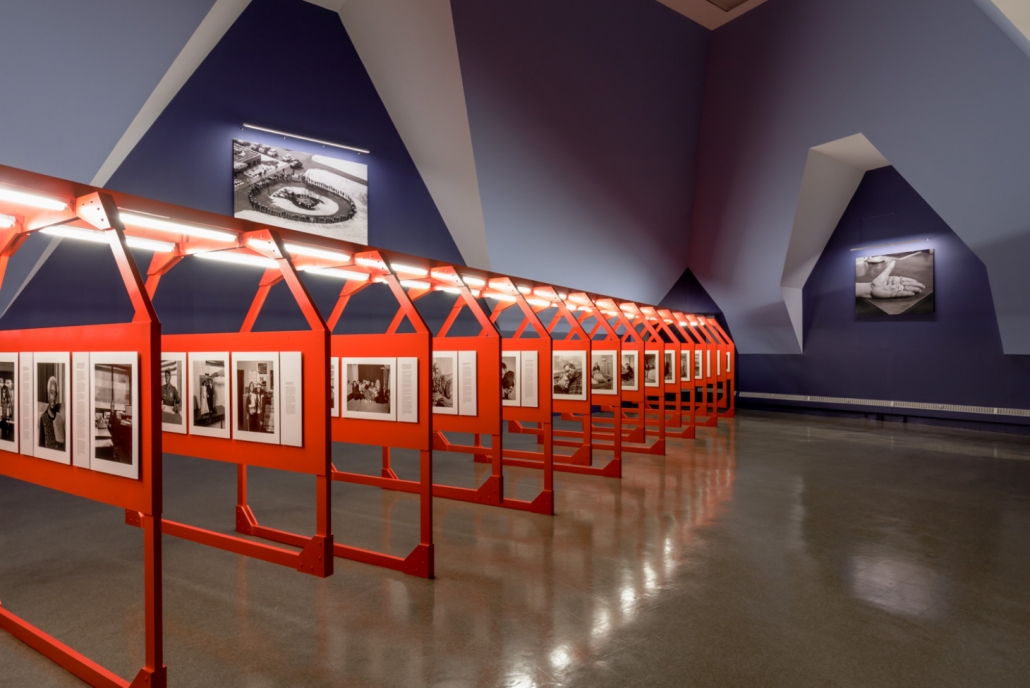
LaToya Ruby Frazier, The Last Cruze (detail) 2019, mixed media. Photo: Elon Schoenholz
The transformation in photography today is not that artists have abandoned a productive interest in the state of the world, including these sorts of cruel labor conditions, which social documentary photographs explore. They haven’t. LaToya Ruby Frazier is one impressive example.
“The Last Cruze, her moving exhibition at Exposition Park’s California African American Museum in 2021, registered the lives of union workers at the General Motors plant in Lordstown, Ohio — workers displaced and disrupted when the factory was shuttered two years earlier. Frazier’s installation of 67 black-and-white photographs and one color video told an unflattering story of the human aftermath, and it did so in fascinating ways.
But it is also fair to say that her soulful installation did not — could not — generate the same sort of outrage that Hine’s photographs did. In 1908, when he began to publish his images of young children working under bleak conditions in factories and on farms, the context in which the pictures appeared was radically different from today’s visual environment.
Simply put, photographs were still scarce, relatively speaking, but they were on their way to replacing woodblock illustrations in newspapers and periodicals to become the dominant form of visual media. Camera pictures were disruptive. They connected straight to the world in front of the lens, and they had the capacity to grab eyeballs, pulling minds along with them.
Today, living in a media-saturated landscape, there’s no escape from them. Only rarely do they disrupt. Wake up in the morning, check your phone, and scores — maybe even hundreds — of pictures flash by before breakfast. In such a milieu, Hine’s troubling 1908 photographs would easily disappear, perhaps seizing a moment but soon evaporating into the visual miasma that floods the zone daily.
[…]
Courtesy of: Los Angles Times
