LaToya Ruby Frazier on The Liberty Portraits

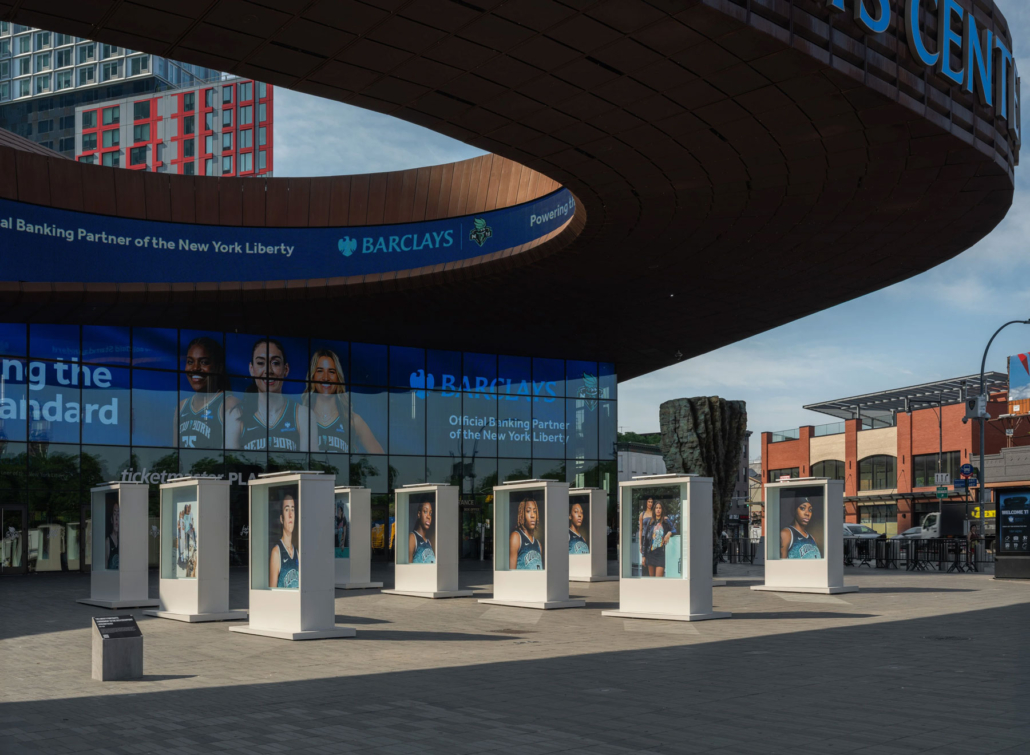
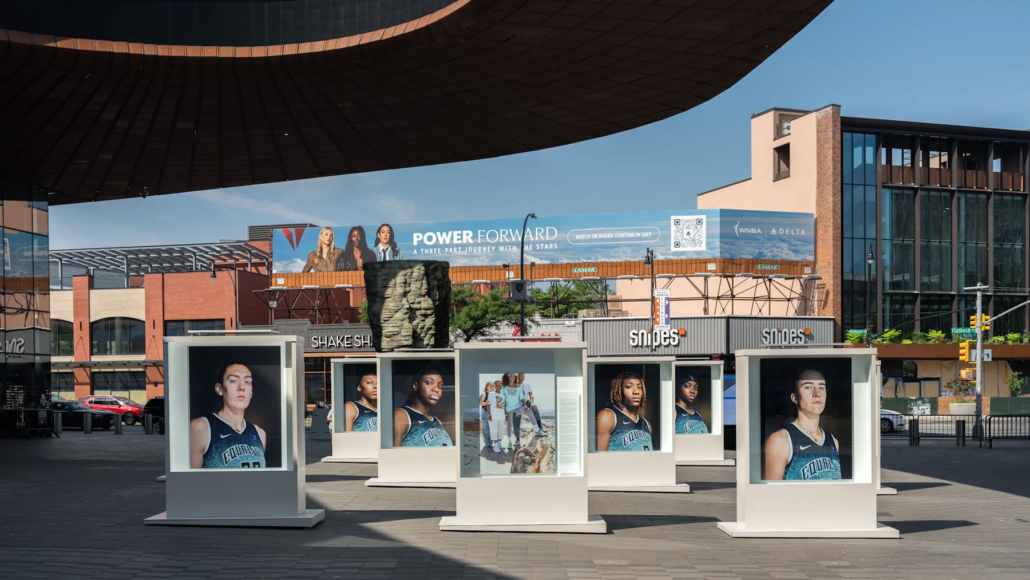
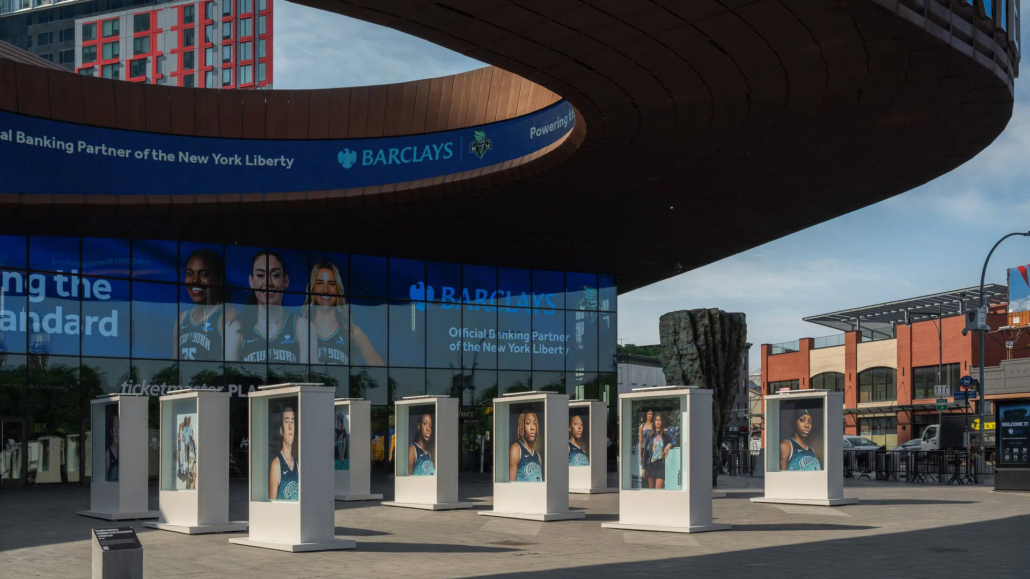
“The ten, nine-foot tall double-sided structures is my new 21st century monument dedicated to the New York Liberty 2024 championship team.”

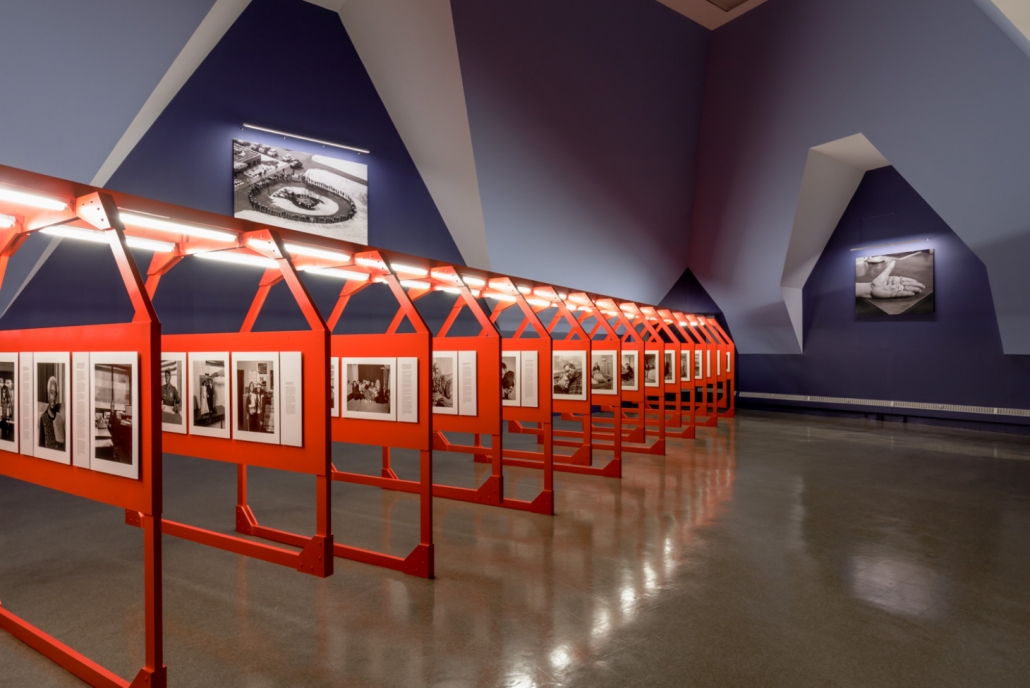
On July 3, BSE Global, parent company of 2024 WNBA Champion New York Liberty, the Brooklyn Nets and Barclays Center, alongside its Vice Chair Clara Wu Tsai revealed The Liberty Portraits: A Monument to the 2024 Champions, a new public art installation by renowned artist LaToya Ruby Frazier honoring the 2024 WNBA championship team, now on display on the plaza at Barclays Center.

The series, Frazier’s first outdoor installation, celebrates the New York Liberty as professional athletes, reflecting the power of female leadership, influence, diversity, love for the game of basketball and family. Referencing the heroic scale of the Statue of Liberty, Frazier designed double-sided, nine-foot-tall portraits of each player on the 2024 roster presented in architectural display cases—one side featuring a portrait of a player in uniform, and the reverse side showcasing an image of the same player with their chosen family. To make the latter portraits, Frazier visited the players in locations meaningful to them, including spending time with Jonquel Jones’ family in the Bahamas and visiting players in Texas, Arkansas and Alabama, among other locations. Known for incorporating storytelling in her work, Frazier’s portraits also include the voice of a loved one chosen by each player as first-person testimonies on text panels. The Liberty Portraits: A Monument to the 2024 Champions will be on display through the 2025 WNBA season.

Read more…

Courtesy of: @nyliberty

The kids are alright

Meer
Timothy Taylor Gallery

27 Jun — 1 Aug 2025 at the Timothy Taylor Gallery in NYC

Timothy Taylor is pleased to announce The kids are alright, a group exhibition curated by Helen Toomer. Opening in New York on 27 June, this presentation will feature contemporary and historical works that explore cultural conceptions of childhood.

The exhibition includes work by Ann Agee, Diane Arbus, Michaël Borremans, Louise Bourgeois, Cecily Brown, Zoë Buckman, Dominic Chambers, Joana Choumali, Larry Clark, Mark Cohen, R. Crumb, Gehard Demetz, Kim Dingle, Madeline Donahue, Marcel Dzama, William Eggleston, Lloyd Foster, LaToya Ruby Frazier, Julia García, Elizabeth Glaessner, Jay Lynn Gomez, Titus Kaphar, Jonathan Lasker, Louise Lawler, Charles LeDray, Sherrie Levine, Sally Mann, Marape, Elizabeth McIntosh, Joel Meyerowitz, Annie Morris, Ragen Moss, Anya Paintsil, Gordon Parks, Erin M. Riley, Kenny Rivero, Antonia Showering, David Shrigley, Ruby Sky Stiler, Katie Stout, Alison Elizabeth Taylor, and Rhys Ziemba.

The kids are alright brings together a multigenerational group of artists whose work engages with the realities and mythologies of childhood. Through painting, sculpture, photography, works on paper, and textiles, the exhibition reflects on how childhood is shaped, remembered, politicised, and imagined, and considers what it means to see the world through the eyes of children today.

[…]

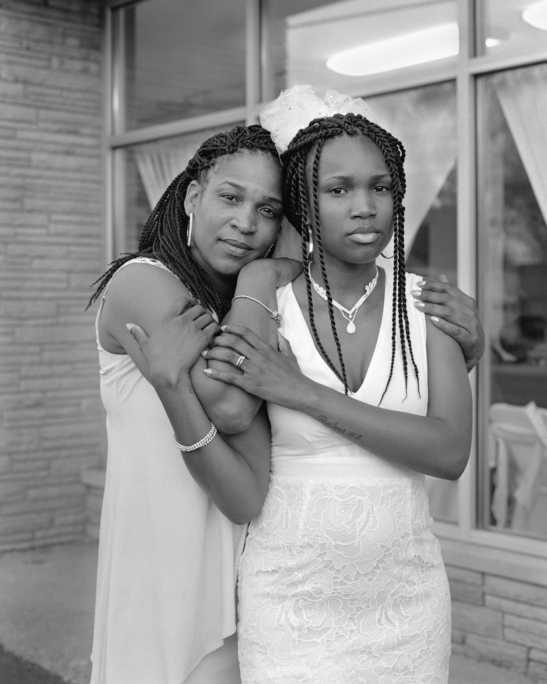
Andrea holding her daughter Nephratiti outside the Social Network Banquet Hall, Flint, Michigan, 2016-2017. From the series Flint is Family (2016–2022) by LaToya Ruby Frazier.

The earliest work in the exhibition, Gordon Parks’s photograph Untitled, Alabama (1956), pictures two young dressed-up girls playing tea party in a puddle on a muddy street. The work belongs to Parks’s seminal series Segregation in the South, which documented the wake of the 1955 bus boycott in Montgomery, Alabama. Here, in the context of a tragically racially divided region, two little girls use play to learn about social mores. LaToya Ruby Frazier’s photograph Andrea holding her daughter Nephratiti outside the social network banquet hall, Flint, Michigan (2016–17) is likewise part of a larger documentary series, the lauded Flint is Family, which traces a public health crisis caused by government neglect and corporate greed. Frazier’s image centres on a bride and her mother in tender embrace, lovingly holding each other up.

[…]

Read more…

Courtesy of: Meer

Lewis W. Hine’s photos helped child labor laws pass a century ago

Los Angeles Times
By Christopher Knight

Trained as a sociologist, Lewis Hine picked up a camera and trained it on the cheap labor performed by children in American factories and on farms.

The exploitation shocked the public, Hine’s poetic photographs exposing the soul-crushing nature of childhoods lost to labor.

In the modern-day search for cheap labor, sometimes to replace migrant workers, many states want to roll back the child labor laws that Hine’s photographs helped to get passed.

Legislatures in 16 states, Florida prominent among them, have been deliberating rolling back child labor laws. In some cases, major steps have already been taken to loosen restrictions on work by kids as young as 14. The erasures, almost exclusively promoted by Republicans, target legal prohibitions against child exploitation that have been in place for nearly a century.

Here’s a surprise: Radical transformations in photography are one primary reason the threatened rollbacks have gotten traction.

In the first decade of the 20th century, sociologist Lewis W. Hine (1874-1940) picked up a camera and trained it on the cheap labor performed by children, which had become commonplace everywhere from Pittsburgh steel mills to Carolina textile factories, from an Alabama canning company for shucked oysters to West Virginia factories for glass. When published, Hine’s haunting pictures scandalized America, and laws to protect kids emerged.

[…]

LaToya Ruby Frazier. The Last Cruze

LaToya Ruby Frazier, The Last Cruze (detail) 2019, mixed media. Photo: Elon Schoenholz


The transformation in photography today is not that artists have abandoned a productive interest in the state of the world, including these sorts of cruel labor conditions, which social documentary photographs explore. They haven’t. LaToya Ruby Frazier is one impressive example.

“The Last Cruze, her moving exhibition at Exposition Park’s California African American Museum in 2021, registered the lives of union workers at the General Motors plant in Lordstown, Ohio — workers displaced and disrupted when the factory was shuttered two years earlier. Frazier’s installation of 67 black-and-white photographs and one color video told an unflattering story of the human aftermath, and it did so in fascinating ways.

But it is also fair to say that her soulful installation did not — could not — generate the same sort of outrage that Hine’s photographs did. In 1908, when he began to publish his images of young children working under bleak conditions in factories and on farms, the context in which the pictures appeared was radically different from today’s visual environment.

Simply put, photographs were still scarce, relatively speaking, but they were on their way to replacing woodblock illustrations in newspapers and periodicals to become the dominant form of visual media. Camera pictures were disruptive. They connected straight to the world in front of the lens, and they had the capacity to grab eyeballs, pulling minds along with them.

Today, living in a media-saturated landscape, there’s no escape from them. Only rarely do they disrupt. Wake up in the morning, check your phone, and scores — maybe even hundreds — of pictures flash by before breakfast. In such a milieu, Hine’s troubling 1908 photographs would easily disappear, perhaps seizing a moment but soon evaporating into the visual miasma that floods the zone daily.

[…]

Read more…

Courtesy of: Los Angles Times

Get A Load Of These Black Women Artists–And Their Artwork

BLACK ENTERPRISE
by Ahsan Washington

19 Black women visual artists to recognize for International Black Women’s History Month

As we enter International Black Women’s History Month, Black art has always been a means of documenting and creating history, putting out powerful stories that depict Black women’s experiences, struggles, and triumphs. BLACK ENTERPRISE has chosen 19 Black women visual artists to honor and recognize their transformative work and re-echo the need for their artistic voices in the broader cultural landscape.
[…]

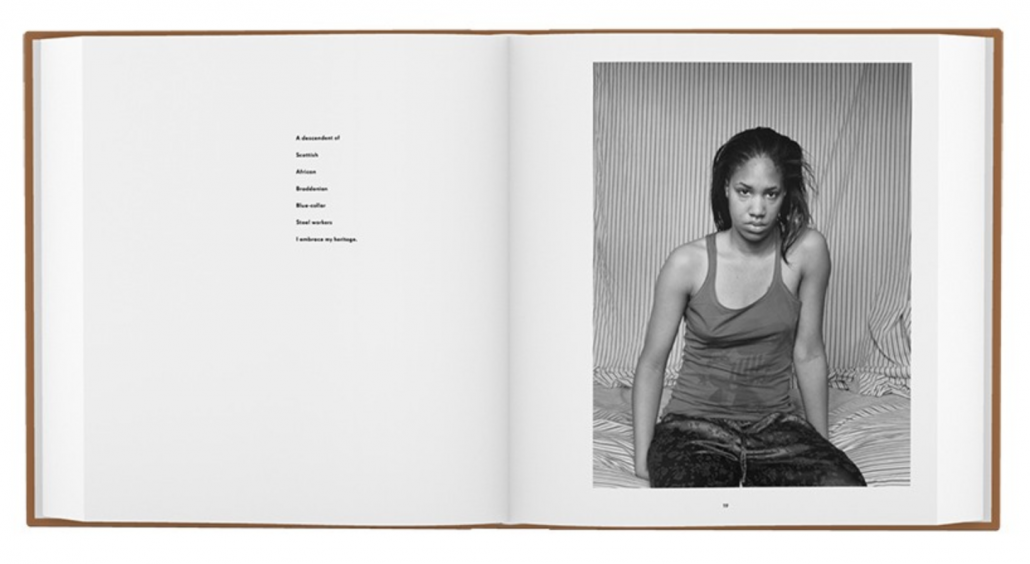
Notion of Family book

Latoya Ruby Frazier

LaToya Ruby Frazier is a photographer and visual artist who focuses on racial and economic inequality. In her photography, video, and performance, she documents environmental racism and healthcare disparities in working-class Black communities. Her well-known work, “The Notion of Family,” shows the challenges of her hometown and her own family. Frazier’s artwork has graced the spaces of institutions like MoMA and the Whitney Museum.

Read more…

Courtesy of: BLACK ENTERPRISE

The 100 Best Artworks of the 21st Century

ARTnews
by The Editors of ARTnews, Art in America

#22: LaToya Ruby Frazier, Flint is Family (2016)


LaToya Ruby Frazier: Flint Students and Community Members Outside Northwestern High School (Est. 1964) Awaiting the Arrival of President Barack Obama, May 4, 2016, Flint, Michigan, III, 2016-17.

LaToya Ruby Frazier: Flint Students and Community Members Outside Northwestern High School (Est. 1964) Awaiting the Arrival of President Barack Obama, May 4, 2016, Flint, Michigan, Ill, 2016–2017. Gelatin silver print. 20 x 24 inches.

A global recession, a pandemic, 9/11, the Arab Spring, Brexit, the rise of Web 2.0, unrest in the face of economic stability, wars in Afghanistan, Ukraine, Gaza, and elsewhere: these were but a few of the many events that have defined the past 25 years, a period characterized by tumult and uncertainty. That all may explain why art appeared to change faster than ever all the while, with artists burning through styles and tendencies with each coming year.

With the 21st century now at the quarter point, we’ve taken the opportunity to pinpoint the greatest artworks of the past 25 years. Even though we set down some parameters for ourselves (more on that here), it was no small task—one made more difficult by the restless creativity of artists during this period.

The joy of an epic list like this one is that it can’t encapsulate everything: we know we’ve left some artworks off, simply because there was no shortage to choose from. We hope you’ll discover some amazing pieces here, reflect on some that are much-loved already, and debate the merits of others. And moreover, we hope to learn of new artworks through the conversations we hope our list inspires. […]

This article features contributions from the following writers: Francesca Aton, Andy Battaglia, Daniel Cassady, Anne Doran, Sarah Douglas, Maximilíano Durón, Alex Greenberger, Harrison Jacobs, Tessa Solomon, and Emily Watlington.

Read more…

Courtesy of: ARTnews

How Artists Are Reframing Climate Doom

ARTnews Art in America
by Kelly Presutti

LaToya Ruby Frazier. Flint is Family, 2019

Zion Taking Her First Sip of Water from the Atmospheric Water Generator with Her Mother Shea Cobb on North Saginaw Street Between Morengo Avenue and East Pulaski Avenue, Flint, Michigan, 2019. From the series Flint Is Family, Part II (2017-2019) by LaToya Ruby Frazier.

Literally sent from the raging fires in Los Angeles, Breath(e): Toward Climate and Social Justice just arrived at the Moody Center for the Arts at Rice University. Organized by the Hammer Museum, it is on view in Houston through May 10. That a show about climate change would flee LA under such duress might seem uncanny if disaster wasn’t becoming so terrifyingly commonplace.

The exhibition, however, veers clear of outright terror; there’s enough of that in the news. Instead, 14 resoundingly smart artists experiment with solutions, some of them literal, as with Xin Liu’s work with a solvent capable of dissolving plastic. Others are speculative, as in Cannupa Hanska Luger’s sculptural installation of looming Indigenous space travelers clad in protective gear made from recycled materials, nomads surviving in a hostile environment.

The show was adapted to Houston’s local climate, with works attending to the particularities of the Gulf Coast landscape and to the city’s role as the so-called energy capital of the world. Liu is using the solvent—developed in a Rice lab—to slowly degrade 3D-printed models of downtown Houston and the Rice campus. Luger’s figures are backed by a threaded horizon line that replicates Houston’s low-lying topography, and accompanied by a video featuring the oaks outside the Moody, connecting the here and now to the future possibilities his work conjures.

[…]

LaToya Ruby Frazier, Flint is Family installation view in the Breath(e): Toward Climate and Social Justice exhibition. Photo: Jeff McLane

Hope, Rebecca Solnit has written, is the belief that what we do matters. It comes from the realization that not only is another world possible, but that it’s already here. LaToya Ruby Frazier’s contribution shows us this other world, driven by goodness rather than greed. Her Flint is Family photographs (2016–22) depict the community affected by the famed Flint water crisis. The third and final act of the series is on view at the Moody: it documents the contributions of Moses West, the engineer responsible for an atmospheric water generator that provided safe, clean, and free water to Flint by collecting condensation from the air. The photographs show moments of exuberant relief as residents worked together to distribute the water. The pictures stand as proof that in the wake of disaster, there are people who will still prioritize generosity, resourcefulness, and altruism—something to hold on to as the disasters keep coming.

Read more…

Courtesy of: ARTnews Art in America